Most people meet an AI model at its best. You give it a clean prompt, it returns something impressive, and for a moment the work looks solved. Then you put it to real work, a task with five steps, a deadline, a database, a customer waiting on the other end, and the same model that dazzled in the demo starts to wobble. It forgets what it did two steps ago. It invents a file path. It does ninety percent of the job and quietly breaks the last ten.
The instinct is to blame the model, or to go hunting for a better one. That is rarely where the problem lives.
The gap between a model that is impressive and a system that is reliable has a name now, and it is becoming one of the more useful ideas in applied AI: harness engineering.
What a harness actually is
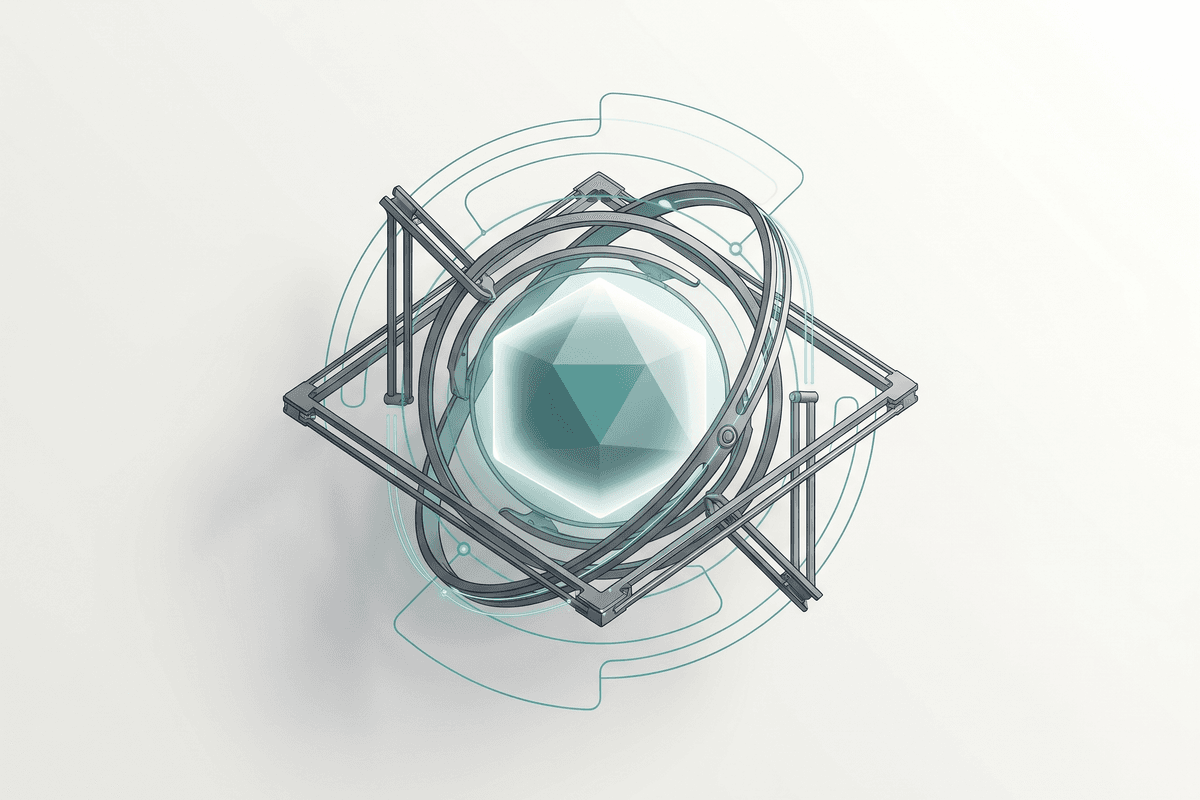
A model on its own is a remarkably capable text predictor. Give it words, it returns the most plausible next words. That is the brain. What it does not arrive with is everything around the brain that turns thinking into doing, dependably. That surrounding system is the harness.
Mitchell Hashimoto, who co-founded HashiCorp, put a name to it from his own work, and was honest about how new it is: "I don't know if there is a broad industry-accepted term for this yet, but I've grown to calling this harness engineering." The hedge is worth keeping. This is a discipline still naming itself.
Strip away the jargon and a harness is the set of supports that sit between the model and the real job:
- Tools: the actions it can actually take: search a file, send an email, query a database, run a calculation.
- Memory: what carries over, so the system isn't starting from zero every time.
- Context: what the model is shown at the moment it decides, and just as importantly, what it is not shown.
- Permissions: what it may do on its own, and where a human stays in the loop.
- Verification: the checks that confirm the work is right before it counts.
- Recovery paths: what happens when a step fails, so a small error doesn't become a broken outcome.
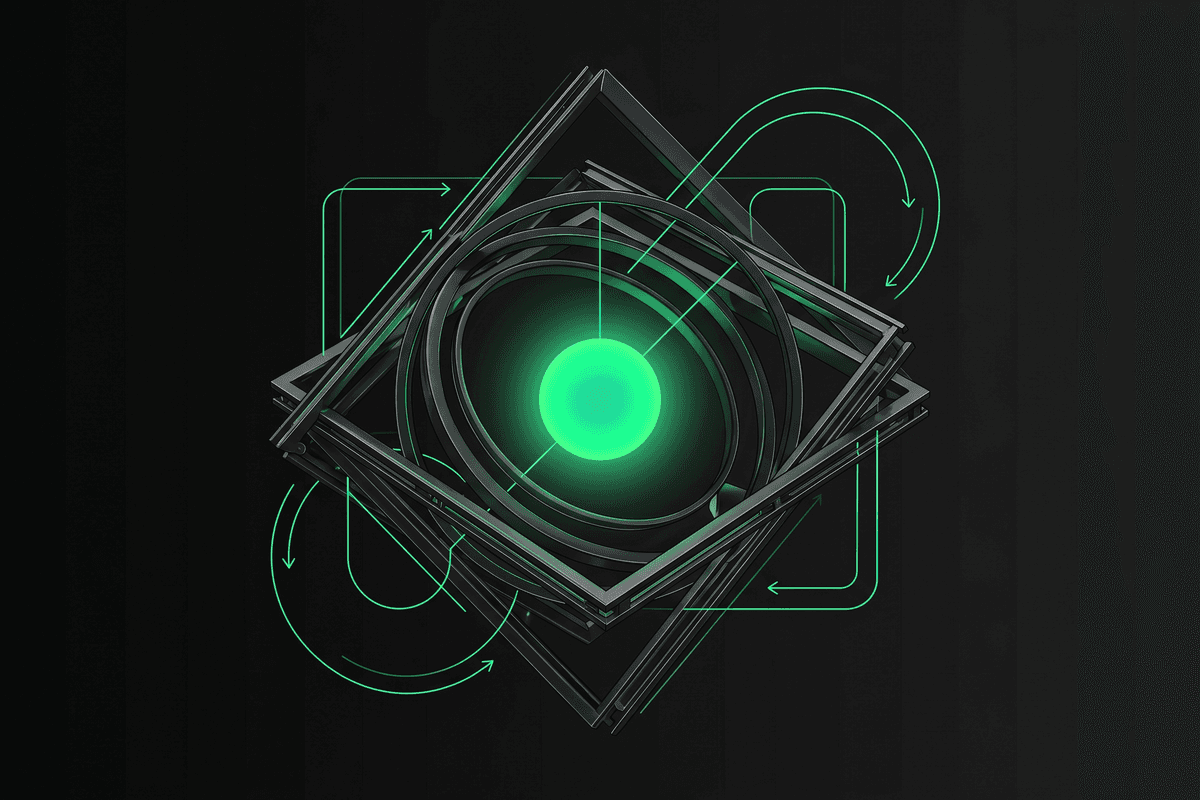
- Feedback loops: how the system learns from what just happened and does better next time.
None of that is the model. All of it decides whether the model is useful.
The advantage has quietly moved. With capable models widely available, what separates a system that works from one that merely demos is mostly the harness around it, and a harness is something you build, not something you buy.
Why this is surfacing now
For a couple of years the energy went into the models themselves, and into prompt engineering, the craft of asking well. That craft still matters; a clear instruction still beats a vague one. What changed is that the teams furthest along found a ceiling on how much a better prompt alone could buy them, and started investing in the system instead.
The evidence is concrete. OpenAI described building close to a million lines of production code in five months with a team that grew from three engineers to seven, not by swapping in a smarter model, but by carefully engineering the harness their coding agent worked inside.
Production code OpenAI reported shipping in five months with a team that grew from three engineers to seven, by engineering the harness, not the model.
Researchers are quantifying the same effect. A 2026 paper from City University of Hong Kong, with Microsoft Research collaborators, introduced a method that improves an agent's harness using only its own past attempts: no human labelling, no answer key. A single pass lifted the agent's success rate on a hard software-engineering benchmark from 59% to 78%. The model didn't change. The system around it did.
Anthropic, describing its own engineering, ran a long task with three cooperating agents (one to plan, one to build, one to evaluate the result) and got markedly better work than a single agent attempting the whole thing alone. It cost more and took longer; reliability usually does.
The pattern is reaching ordinary operations, not just labs. Microsoft's site-reliability agent became generally available in March 2026; the team reported that giving it better context (letting it explore systems the way an engineer would) raised how often it correctly understood what was being asked from 45% to 75% on unfamiliar incidents.
There is a sober counterweight worth holding alongside all of this. Gartner expects more than 40% of agentic AI projects to be cancelled by the end of 2027. Read those together and the lesson is consistent: the projects that struggle rarely fail for want of a clever model. They fail for want of the surrounding system (the verification, the recovery, the context discipline) that turns a capable model into something you can depend on.
The part that is open
Here is what matters most if you are not a frontier lab: almost none of the harness is secret. The protocols for connecting models to tools, the agent frameworks, the testing harnesses, the patterns for memory and context: a great deal of it is open, documented, and shared. Hashimoto coined the term in public. The research ships with its code. The component lists live in public repositories anyone can read.
That openness is the whole opening. The expensive, proprietary part of AI is the model, and the model is increasingly something you rent by the token. The part that creates durable advantage, the harness, is assembled from pieces that are largely open to everyone. The distance between a small team and a large one is no longer access. It is craft.
The model is the part you rent. The harness is the part you build, and it is where the advantage now lives.
The deep generalist's moment
There is a particular kind of person this suits, and it is worth naming because most small businesses are run by one.
The deep generalist is the operator who has done enough across enough domains (design, operations, sales, the actual delivery) to hold the whole picture in their head. Historically that breadth came with a hard limit: one person can only be in one place, doing one thing, at a time. Depth without scale.
A harness changes the arithmetic. The generalist stops being the one who does every task and becomes the one who designs the system that does them, deciding what to automate, what to verify, where their own judgement stays in the loop, and what happens when something goes wrong. The breadth that used to cap their output becomes the very thing that makes them good at building the harness, because designing it well means understanding every part it touches.
This isn't abstract for us. It is increasingly how a small operation like ours works: one generalist holding the strategy, with a harness carrying the load that once needed more hands. The model is the easy part to acquire. The system around it, and the judgement of where to keep a human in the loop, is the craft.
What this means for a small team in Malta or Europe
If you run a small or mid-sized business, in Malta, or anywhere across Europe, the practical reading is encouraging, and it isn't the usual call to buy more technology.
You don't need the largest model. You need the system around whatever model you use to be reliable: tools that perform the real actions of your business, verification that catches mistakes before a customer does, a sensible line between what runs on its own and what waits for you, and a way to recover gracefully when something breaks. Reliability and control aren't constraints bolted on at the end. Built in from the start, they are the feature.
Two things follow. First, this is buildable, by you or with help, from components that are largely open, not locked behind a frontier lab's door. Second, it rewards exactly the trait a good owner already has: knowing your own operation well enough to design the system that runs it. (It is the same lesson we reached from a different direction in AI Reliability Is a Constraint Problem.)
Start small. Take one task you already trust a model to attempt, and instead of asking for a better answer, build a better harness around it: give it the right tools, check its work, decide what it may do alone. Then do the next one. That is harness engineering: a craft you can pick up deliberately, one reliable step at a time.
Update, 17 July 2026. The vocabulary this post argued for is now shipping as a product category. Mozilla.ai's newly launched open-source LLM control plane, Otari, lists "Agent Harnesses" with built-in tools and orchestration among its core features that infrastructure teams no longer have to build per application. When the system around the model becomes a named product layer, the craft of designing that system is what remains yours: which tools, which checks, which permissions. That part does not ship in anyone's platform.
If you'd like a second pair of eyes on where a harness fits in your own operation, book a consultation. No pitch, just an honest look at what to automate, what to verify, and where to keep yourself in the loop.
Approach
This piece synthesises primary sources (engineering retrospectives, peer-reviewed research, and official product documentation published in 2026) with our own practice running production AI systems. Where a figure was reported only by a secondary source, we traced it to a primary one or left it out; claims we could not verify primarily were dropped rather than softened.